Beyond Rooms & Moments
Originally published at nodescription.substack.com
Perspective cartography with Polis-like event tools that may one day exist
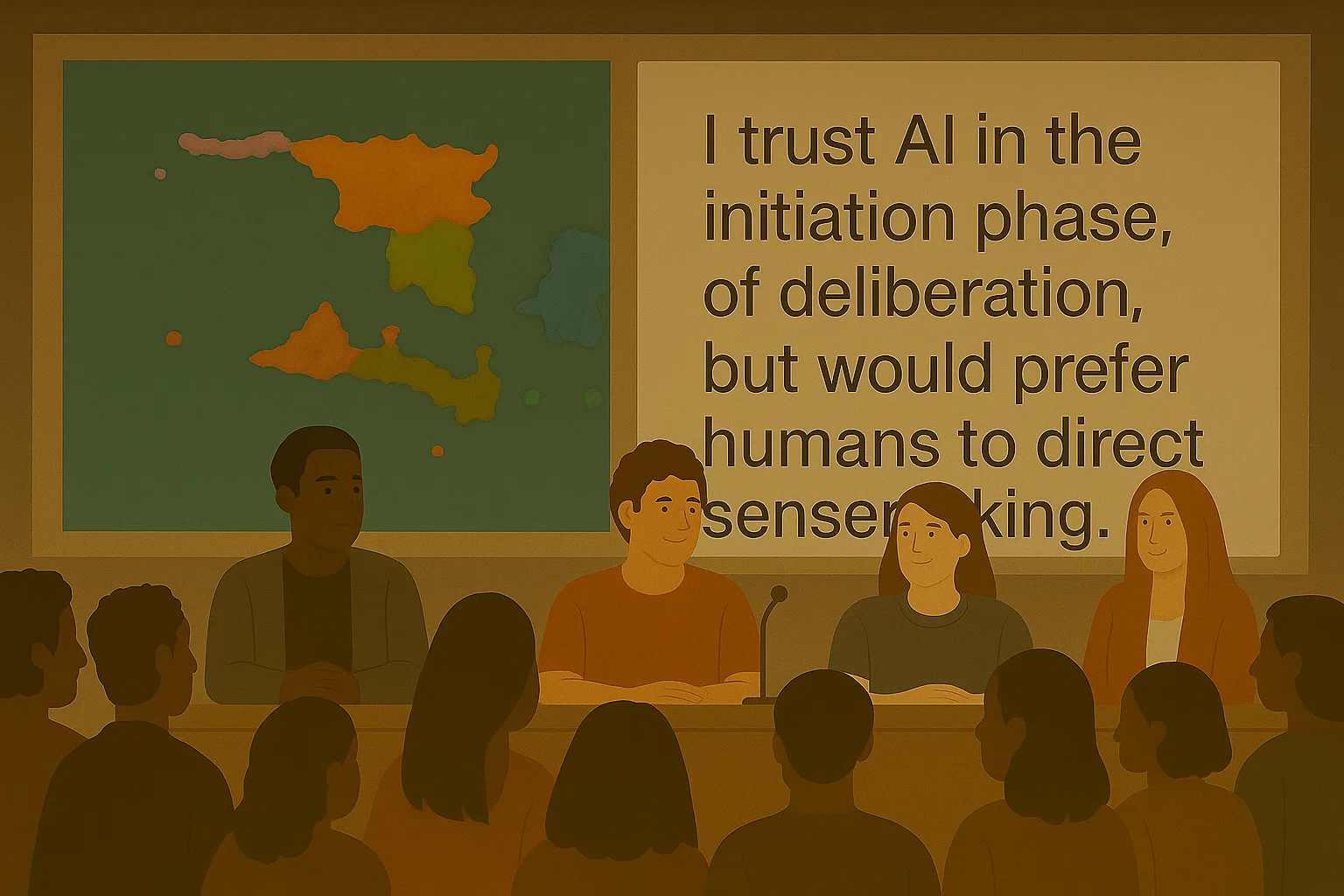 Created with OpenAI Sora.
Over the past decade or so, I’ve spent a lot of time reflecting on and advocating for many of the as-yet-nonexistent possibilities inherent in the core concepts of Pol.is, which have yet to be realized. I believe that its basic technology has dozens or hundreds of subtle applications in various processes, from the mundane-everyday to the democratic-sacred. Here’s a first pass at imagining aloud some of what I feel in the possibilities.
Picture this: you’re one of 200 people lucky enough to be sitting in a room, watching a panel unfold live. You’re experiencing a rare coincidence of spatial and temporal privilege — being in the right place at the right time. That’s the unique advantage most in-person events confer.
But what about everyone else?
The people who couldn’t be there, because of geography and costs. Or the ones who couldn’t tune in, because life required them elsewhere. And what of the privilege of the panelists themselves. How might we design collective infrastructure to use the familiar formats, but with more voices platformed?
The Status Quo
Most panels today already extend participation in limited ways:
-
Livestreams let remote audiences watch in real time, bridging the spatial gap.
-
Recordings let people catch up later, bridging both spatial and temporal gaps.
-
Q&A sessions allow for some back-and-forth — often constrained, often privileging those in the room.
These are useful, but they’re still one-way or low-bandwidth interactions. They reinforce the divide between those with spatial and temporal luxury and those without it.
A Different Possibility
Now imagine a panel with a new layer of infrastructure: a Polis-like tool for perspective cartography. Here’s how it could work.
Step 1: Capturing the Conversation
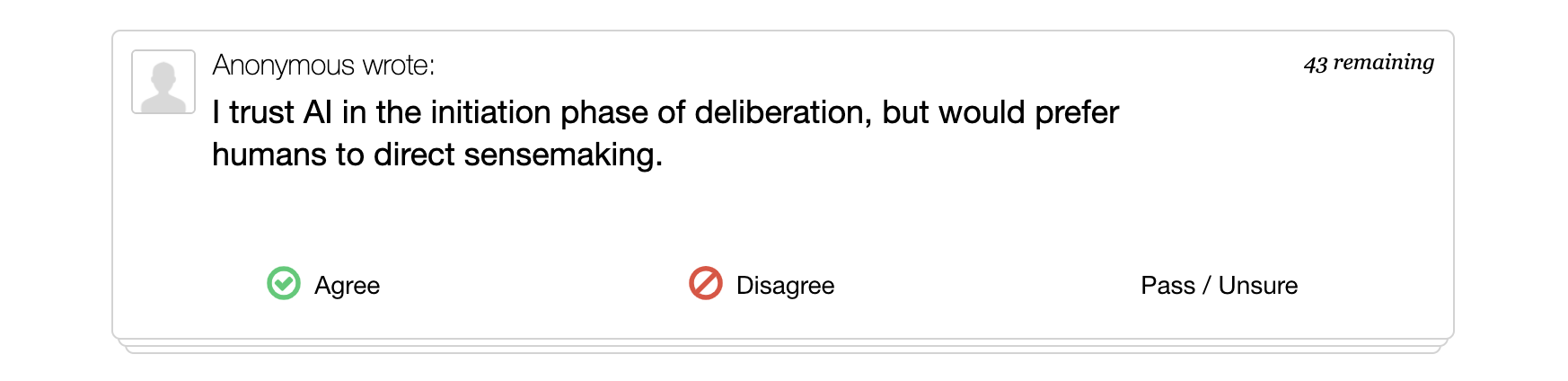
Before the event, a link is shared with attendees (both in-person and remote). As panelists speak, their ideas are distilled into short, bite-sized statements:
- “I feel this way…”
- “I believe X…”
- “I identify with…”
These statements appear on a screen behind the panelists, one at a time. The audience, without looking down at their phones, can respond with a simple gesture on a triangular interface: agree, disagree, or pass.
Step 2: Mapping Perspectives
As responses accumulate, a live map takes shape on the projected screen.
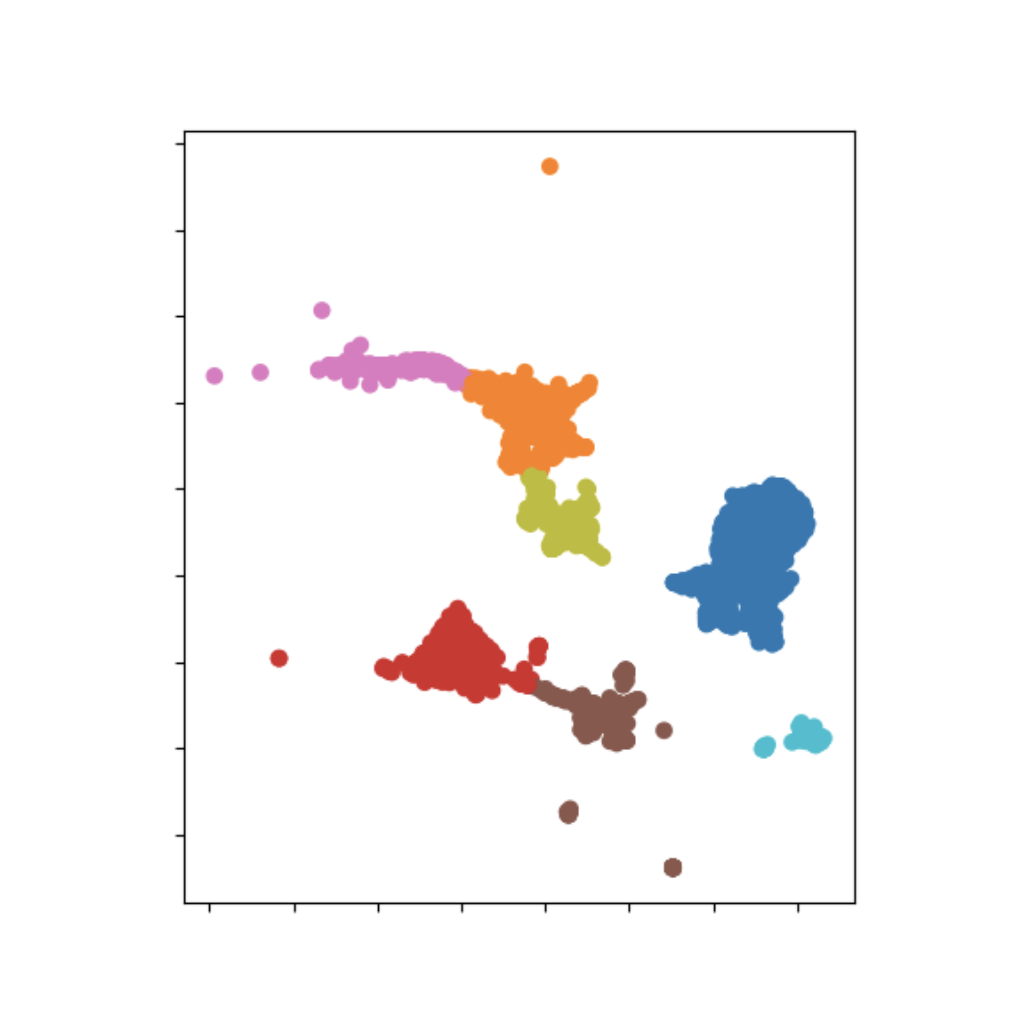
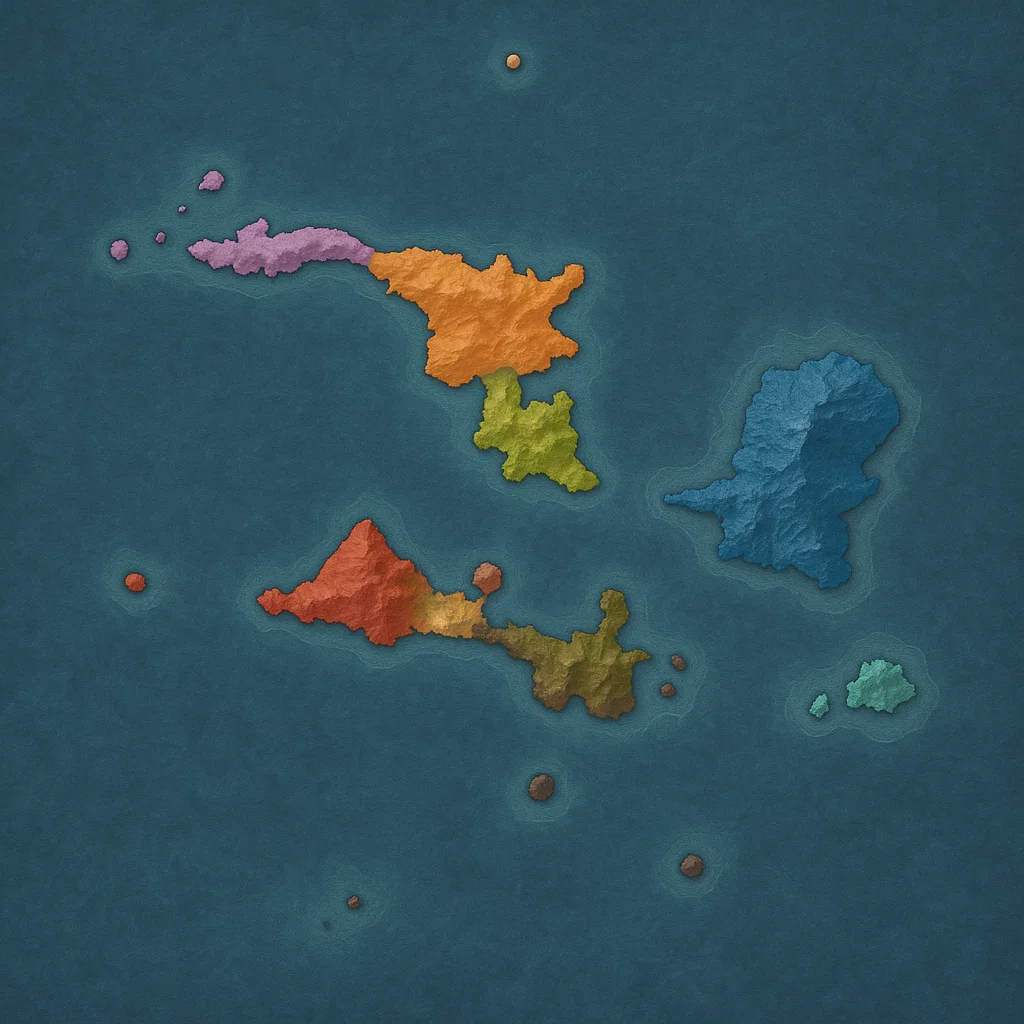
- Each participant is a dot.
- Dots cluster into islands of shared perspective — your “home” in the discussion.
- Participants that exist around you on your home island share the most perspectives, and as you travel further, people become less and less like you.
- Peninsulas, coves, and land-bridges reveal how the people who make up those features have perspectives that connect or diverge.
A behind-the-scenes facilitator explores the map in real time, exploring agreement and disagreement and annotating what these formations might mean about the people who are placed there due to subtle alignments.
Step 3: Enriching the Q&A
When the panel transitions to Q&A, participants can request the mic through the web app. The facilitator prioritizes voices from across the map, especially from islands less represented in the room. They might even take the mic and call on certain perspectives they know to be present, but not yet heard. The goal: balance airtime to reflect the full opinion landscape, not just the most confident or most local voices.
Step 4: Extending Beyond the Event
When the event ends, the video recording is published, and the process continues:
- Panelists themselves respond to those same statements as the audience.
- Watchers of the archival video engage in the following days and weeks.
- The map evolves, showing where later viewers overlap or diverge from those who were “in the room.”
Step 5: Filling the Gaps
After weeks of participation, facilitators identify underrepresented regions of the map. From these, a handful of audience members are blended (with LLM help) into several composite “virtual panelists.” Using the transcript, an LLM generates plausible interjections — perspectives that were missing in the live discussion.
The original panelists are invited to review and respond to these new contributions. With consent, their responses may even be voice- or video-synthesized for smooth splicing into the final recording.
Step 6: The Extended Cut
The final release of the panel video isn’t just a replay. It’s an extended cut, annotated to clarify:
- The original dialogue.
- The missing perspectives that surfaced only through post-facto collective participation.
- The ways those perspectives reframed the conversation.
Instead of privileging the lucky 200 conference-goers who enjoyed the coincidence of spacetime required to attend, the event now reflects contributions from across space and time — stitching together synchronous and asynchronous participation into something richer, fairer, and more representative.
Why This Matters
Events shouldn’t just be about who could make it into the room. If we can bring thoughtful tools into existence, archival recordings could become ongoing conversations, continually shaped by the people who care enough to engage, wherever and whenever they are.